
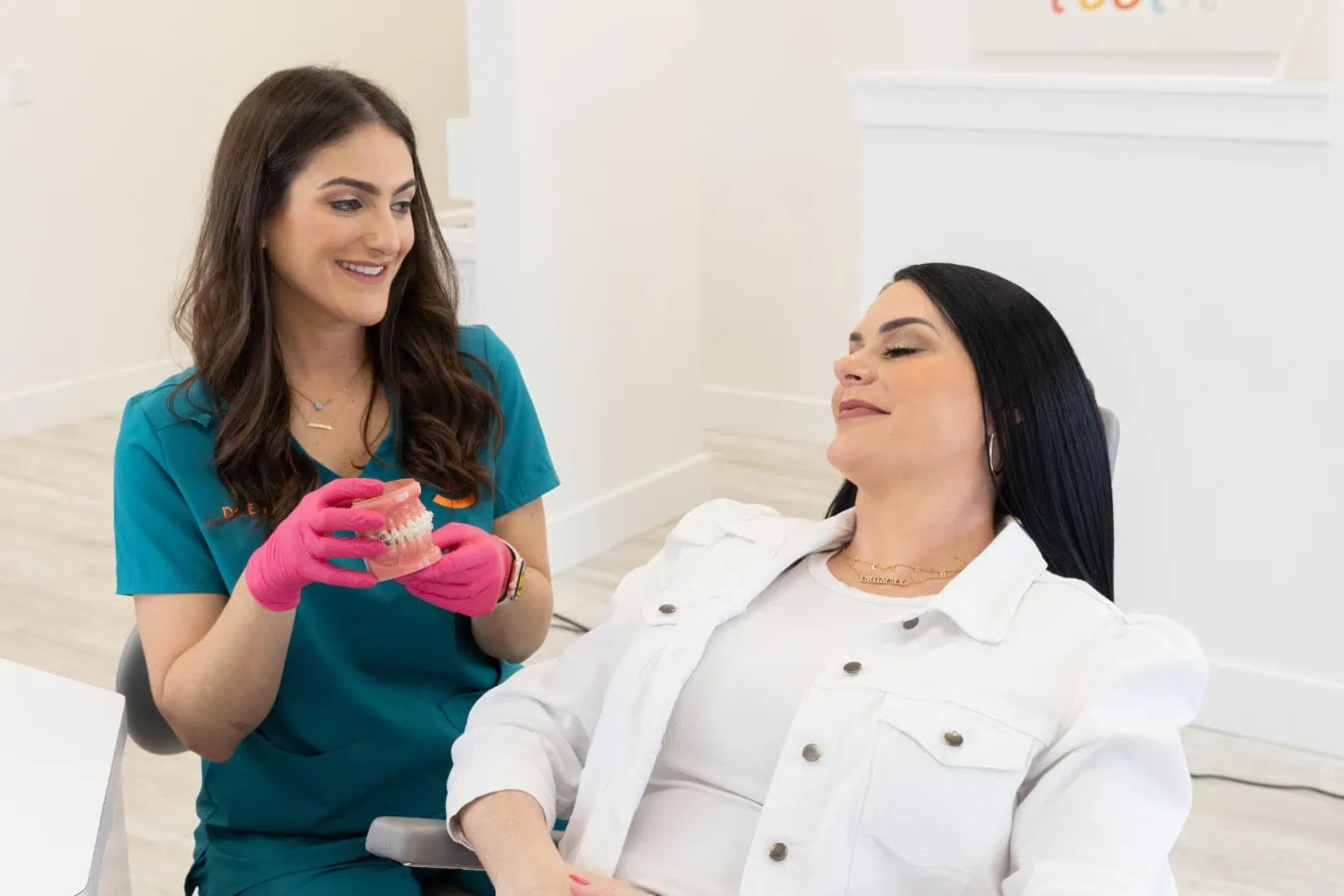
Types of Braces for Adults and Teens
The types of braces available for adults and teens include traditional metal braces, ceramic (clear) braces, self-ligating systems, lingual braces placed behind the teeth, and removable clear aligners. Braces are orthodontic appliances that apply gentle, consistent pressure to move teeth into proper alignment over time. Each option corrects crowding, spacing, overbite, underbite, and crossbite, with differences in visibility, comfort, and cost.
If you're a teen just starting smile transformation or an adult who's ready to finally address alignment concerns, today's braces offer more options than ever before. Members of the Busciglio Smiles family now have access to nearly invisible appliances, faster-acting systems, and removable trays that didn't exist a generation ago.
The basic mechanics behind braces haven't changed much over the decades. What has changed is the technology, materials, and comfort level. Modern braces are smaller, sleeker, and far more discreet than the metal-mouth look many adults remember from their own teenage years.
What Are Braces and How Do They Work?
Braces use carefully applied pressure to guide teeth into healthier positions. The system relies on a few simple parts working together, and the biology of your jaw does the rest. Below, we'll break down the components and who makes a good candidate.
How Do Braces Actually Move Your Teeth?
Every set of braces relies on four main components working together:
- Brackets attach directly to each tooth and serve as anchors for the system
- Archwires connect the brackets and provide the force that guides teeth into position
- Ligatures (small elastic bands or metal ties) hold the archwire to each bracket
- Bands wrap around back molars to provide added anchorage for complex movements
When our doctors tighten or adjust the archwire, it creates pressure on specific teeth. This pressure triggers a biological response in your jaw. The bone around each tooth root gradually remodels, allowing teeth to shift into their new positions. It's a slow, controlled process that typically takes anywhere from 12 to 30 months, depending on your situation.
Who Can Get Braces?
The short answer: almost anyone with healthy teeth and gums. Teens often start smile transformation between ages 11 and 14, when most permanent teeth have erupted but the jaw is still developing. This timing can make certain corrections easier.
Orthodontics isn't just for teenagers. Adults make up a growing portion of the smile family at Busciglio Smiles. You're never "too old" to straighten your teeth. The only real requirements are:
- Healthy gums without active periodontal disease
- Teeth that are strong enough to withstand orthodontic forces
- Commitment to proper care throughout smile transformation
During a free consult, our doctors evaluate each member of the smile family individually to determine which approach will work best for your goals.
Types of Braces Available Today
Five main types of braces serve adults and teens: traditional metal braces (durable and budget-friendly), ceramic braces (tooth-colored for subtlety), self-ligating systems (clip-based, low friction), lingual braces (hidden behind teeth), and clear aligners (removable plastic trays). Choosing the right type depends on your lifestyle, budget, treatment goals, and personal preferences. Here's a detailed look at each option.
How Do Traditional Metal Braces Work?
Metal braces remain the most common and often most affordable option. They consist of stainless steel brackets bonded to the front of each tooth, connected by a metal archwire.
Why people choose metal braces:
- Extremely durable and reliable
- Effective for even the most complex orthodontic cases
- Typically the most budget-friendly option
- Allow for colorful elastic bands (a hit with teens who want to personalize their look)
Modern metal braces are noticeably smaller and more comfortable than older versions. The brackets sit lower on teeth and cause less irritation to lips and cheeks. For members of the smile family who need significant tooth movement or have severe crowding, metal braces often provide the most predictable results.
What Are Ceramic (Clear) Braces?
Ceramic braces work the same way as metal braces, but the brackets are made from tooth-colored or clear ceramic material. This makes them far less noticeable on your teeth.
Why people choose ceramic braces:
- Blend naturally with tooth enamel
- Offer the same effectiveness as metal braces
- Popular with adults and image-conscious teens
- Work well for moderate to complex cases
There is a trade-off though. Ceramic brackets can be slightly more fragile than metal. They may also stain if you consume a lot of coffee, tea, or red wine. Our doctors can discuss whether ceramic is appropriate for your situation.
Self-Ligating Braces Offer a Modern Twist
Self-ligating braces use a specialized bracket design with a built-in clip or door mechanism. This eliminates the need for elastic ligatures to hold the archwire in place.
Benefits of self-ligating systems:
- Fewer adjustment appts (the clips allow the wire to move more freely)
- Often more comfortable with less friction
- Easier to keep clean without elastics trapping food
- May reduce overall treatment time in some cases
Both Damon braces and In-Ovation are popular self-ligating brands. These systems come in metal or clear versions, giving you flexibility in appearance.
What Are Lingual Braces?
Lingual braces are placed on the back (tongue side) of your teeth instead of the front. They're completely invisible when you smile.
Who chooses lingual braces:
- Adults in professional settings who want zero visibility
- Anyone who wants effective treatment without anyone knowing
- Members of the smile family with mild to moderate alignment issues
Lingual braces do require an adjustment period. Your tongue needs time to adapt to the brackets, and speech may be slightly affected at first. They're also more challenging to clean and typically cost more than traditional options. Not every case is suitable for lingual treatment, so a thorough evaluation is essential.
Clear Aligners Offer Removable Convenience
Clear aligners use a series of custom-made, removable plastic trays to gradually shift teeth. You wear each set for about two weeks before moving to the next tray in your sequence.
Clear aligner advantages:
- Nearly invisible when worn
- Removable for eating, brushing, and special occasions
- No food restrictions during treatment
- Fewer emergency visits (no brackets to break)
Clear aligners work best for mild to moderate cases. Severe crowding, significant bite issues, or complex tooth rotations may require traditional braces for the best results. Success also depends heavily on compliance. You need to wear your aligners 20 to 22 hours per day for treatment to stay on track.
Benefits of Smile Transformation for Adults and Teens
Straightening your teeth goes far beyond cosmetic improvement. Smile transformation delivers real, lasting benefits for your oral health and overall quality of life. Our board-certified doctors recommend it not just for appearance, but for long-term function.
How Do Braces Improve Bite Function?
When your teeth align properly, they work together more efficiently. Chewing becomes easier and more effective. You can break down food thoroughly, which aids digestion and reduces strain on individual teeth.
Misaligned bites often cause uneven wear patterns. Some teeth take on more force than they should, leading to chips, cracks, or premature wear. Correcting your bite distributes chewing forces evenly across all teeth.
How Does Smile Transformation Improve Oral Health?
Crooked or crowded teeth create tight spaces where plaque and bacteria hide. Even with diligent brushing and flossing, these areas can be nearly impossible to clean properly. This leads to a higher risk of cavities and gum disease.
Straight teeth are much easier to keep clean. Your toothbrush and floss can reach all surfaces without obstruction. Many members of the smile family find their dental checkups improve significantly after completing smile transformation.
Can Braces Reduce Jaw Pain and Tension?
Bite problems don't just affect your teeth. They can stress your temporomandibular joint (TMJ) and surrounding muscles. This often leads to:
- Chronic headaches
- Jaw discomfort or clicking
- Neck and shoulder tension
- Teeth grinding (bruxism)
Smile transformation addresses the root cause by bringing your bite into harmony. Many people experience relief from these symptoms once their teeth align properly.
Straighter Teeth Build Lasting Confidence
Let's be honest: how you feel about your smile matters. People who are happy with their teeth often smile more freely, feel more at ease in social situations, and project a more positive image. That kind of confidence boost is hard to put a price on.
For teens going through challenging years of adolescence, a smile they're proud of can make a real difference. For adults, finally addressing long-standing alignment issues often brings a sense of accomplishment and renewed self-assurance.
Why Is Smile Transformation a Long-Term Investment?
Smile transformation pays off long-term for your oral health. Properly aligned teeth are less likely to develop issues down the road. You may avoid costly restorative work like crowns, bridges, or implants that become necessary when misalignment causes damage over time.
Braces Comparison: Which Type Is Right for You?
With so many options available, how do you decide? This comparison breaks down the key factors to consider.
What Does a Quick Comparison Look Like?
| Feature | Metal Braces | Ceramic Braces | Self-Ligating | Lingual Braces | Clear Aligners |
|---|---|---|---|---|---|
| Visibility | Noticeable | Subtle | Varies | Invisible | Nearly invisible |
| Durability | Excellent | Good | Excellent | Good | Moderate |
| Comfort | Good | Good | Very good | Adjustment period | Very good |
| Case Complexity | All cases | Most cases | All cases | Mild-moderate | Mild-moderate |
| Maintenance | Moderate | Moderate | Easier | More difficult | Easy (removable) |
| Cost Range | Most affordable | Moderate | Moderate-high | Highest | Moderate-high |
| Typical Timeline | 12-24 months | 12-24 months | 12-24 months | 18-36 months | 6-18 months |
Metal braces offer the most affordability, while clear aligners provide the most discretion for mild cases.
Metal vs. Ceramic: Which Wins on Aesthetics and Durability?
Metal braces win on durability and cost. They rarely break, handle complex movements well, and typically require the lowest investment. Ceramic braces offer a real aesthetic advantage if you want something less noticeable but still need the power of traditional braces.
If you're active in contact sports, metal may be the safer choice. Ceramic brackets can chip or crack under impact. For adults in professional environments or teens who feel self-conscious, the discreet look of ceramic often outweighs the durability concern.
Traditional Braces vs. Clear Aligners: Which Should You Pick?
This is the most common decision point for members of the smile family. A few things to weigh:
Choose braces if:
- You have severe crowding, significant spacing, or complex bite issues
- You want a "set it and forget it" approach (no removing aligners)
- You're concerned about compliance (forgetting to wear aligners)
- Our doctors recommend them for your case
Choose clear aligners if:
- Your case is mild to moderate
- Appearance during treatment is a top priority
- You want to eat without restrictions
- You're disciplined about wearing them consistently
Lingual vs. Traditional: What Are the Hidden Trade-Offs?
Lingual braces offer complete invisibility, but they come with trade-offs. They're more expensive, require a longer adjustment period, and can affect speech initially. Cleaning around lingual brackets takes extra effort.
For those whose careers or personal preferences demand invisible treatment but who aren't candidates for clear aligners, lingual braces fill an important niche.
How Do Teen Preferences Differ From Adult Preferences?
Teens often gravitate toward clear aligners or ceramic braces. The ability to remove aligners for photos, special events, or sports appeals to active teenagers. Those who choose metal braces often enjoy customizing their look with colored elastics.
Adults typically prioritize discretion. Clear aligners, ceramic braces, and lingual options all serve this need. Many adults also appreciate the faster appt times and reduced office visits that self-ligating systems and clear aligners can offer.
The best choice depends on your situation. A free consult with our experienced doctors helps you understand which options suit your case, lifestyle, and goals.
What Affects the Cost of Braces?
The cost of braces depends on four main factors: the type of appliance you choose, the complexity and duration of your case, your insurance coverage, and your geographic location. Traditional metal braces tend to cost the least, while lingual braces cost the most.
Most cases at Busciglio Smiles fall within a moderate range based on these variables.
How Does the Type of Braces Affect Cost?
The type of braces you choose has the biggest impact on cost. Traditional metal braces typically fall at the lower end of the price spectrum. Ceramic braces cost somewhat more due to the specialized materials. Clear aligners and self-ligating systems fall in the mid-to-higher range. Lingual braces, which require specialized training and custom fabrication, generally carry the highest price tag.
How Do Treatment Complexity and Duration Affect Cost?
Not all orthodontic cases are equal. Someone with mild crowding who needs 12 months of treatment will pay less than someone with severe malocclusion requiring 30 months of care. Our doctors assess your needs and build a treatment plan accordingly.
Factors that increase complexity include:
- Significant bite problems (overbite, underbite, crossbite)
- Severe crowding requiring extractions
- Multiple phases of treatment
- Added appliances like expanders or headgear
Does Insurance Cover Braces?
Many dental insurance plans include orthodontic benefits, though coverage varies widely. Some plans cover a percentage of treatment up to a lifetime maximum. Others offer a flat dollar amount toward braces. Review your specific policy or ask our team to verify your benefits before starting treatment.
Even with insurance, you'll likely have out-of-pocket costs. Understanding your coverage upfront prevents surprises.
Are Payment Plans and Financing Available?
Busciglio Smiles understands that braces represent a significant investment. We offer flexible monthly options, 0% financing, and tools like online payment calculators that estimate your monthly cost before your first visit. Ask about options at your first visit so you can compare your choices.
What Added Costs Should You Consider?
Your total investment may include:
- Care for life after treatment ends (essential for maintaining results)
- Follow-up visits for adjustments and monitoring
- Emergency appts if a bracket breaks or wire pokes
- Replacement aligners if you lose or damage a tray
Ask about what's included in your quoted price. Busciglio Smiles bundles most of these costs into one fee, while some offices charge separately for certain services.
Who Is a Good Candidate for Braces?
Almost anyone who wants straighter teeth can benefit from smile transformation. Certain factors make some folks better candidates than others, and our board-certified doctors at Busciglio Smiles will review your specific situation.
Why Is Adolescence the Ideal Timing for Treatment?
The American Association of Orthodontists recommends children have their first orthodontic evaluation by age 7. This allows our doctors to monitor jaw development and catch potential issues early.
Most teens begin active treatment between ages 11 and 14, after most permanent teeth have erupted. At this age:
- The jaw is still growing, making certain corrections easier
- Teeth respond well to orthodontic forces
- Treatment can be wrapped up before high school graduation
- Peer influence often motivates compliance
Early intervention can sometimes prevent more complex treatment later. If your teen shows signs of crowding, spacing, or bite problems, an evaluation at Busciglio Smiles helps determine the right timing.
Is It Ever Too Late for Adults to Get Braces?
Many adults now pursue orthodontic treatment, and it's become much more common in recent years. If you missed out on braces as a teenager, or if your teeth have shifted over time, you can absolutely pursue treatment now.
Adults are excellent candidates when they have:
- Healthy teeth without extensive decay or damage
- Gums free from active periodontal disease
- Realistic expectations about treatment timeline
- Commitment to maintaining good oral hygiene
The main difference for adults is that treatment may take slightly longer. Adult bone is denser than growing teenage bone, so teeth move more gradually. The results, however, are just as beautiful and lasting.
What Qualities Make a Successful Orthodontic Patient?
Regardless of age, successful members of our smile family share a few traits, and honestly, none of them are surprising:
Good oral hygiene habits. Braces create extra surfaces where plaque can hang out. You'll need to brush thoroughly after meals and floss daily. Folks who skip on hygiene risk cavities, staining, and gum issues during treatment.
Commitment to appts. Regular adjustment visits keep treatment on track. Missing appts stretches out your timeline and can mess with your results.
Willingness to follow instructions. Whether that means wearing rubber bands, avoiding certain foods, or keeping aligners in for 22 hours daily, following our doctors' guidance really matters.
Patience. Smile transformation is a process, not an instant fix. Knowing that beautiful results take time helps you stay motivated all the way through.
Who Should Wait or Consider Alternatives?
Some folks may need to address other dental issues before starting orthodontics:
- Active gum disease requires treatment first
- Severe tooth decay needs restoration
- Missing teeth may require implants or bridges that affect treatment planning
- Certain medical conditions may influence timing or approach
A thorough orthodontic evaluation at Busciglio Smiles makes sure you're ready for treatment.
Frequently Asked Questions About Braces
How Long Do Braces Take to Work for Adults vs. Teens?
Most members of our smile family wear braces for 12 to 24 months, with timelines based on case complexity rather than age alone. Teens may see slightly faster results because their jaws are still developing and bone remodels more readily. Adults typically experience similar timelines, though complex cases may extend to 30 months. Clear aligner treatment for mild cases can sometimes finish in as few as 6 to 12 months. Our doctors give you a custom estimate during your free consult.
Are Braces Painful and What Discomfort Should I Expect?
Braces aren't painful, but they do cause some discomfort at certain points. You'll feel pressure and soreness for a few days after your braces are placed and after each adjustment appt. This is normal and means the braces are working. Over-the-counter relievers help, as does eating soft foods during these periods. The inside of your cheeks and lips may feel irritated initially as they adjust to the brackets. Orthodontic wax provides relief by covering any spots that rub.
Can I Play Sports or Musical Instruments with Braces?
Yes to both. Athletes should wear a mouthguard designed for braces during contact sports. These guards fit over the brackets and protect both your mouth and your braces from impact. Many members of the Busciglio Smiles family continue playing football, basketball, soccer, and other sports throughout treatment.
Musicians may need a brief adjustment period with certain instruments, particularly brass and woodwinds. The brackets can feel different against your lips initially. Most players adapt within a few weeks and play normally.
How Do I Clean My Teeth Properly with Braces?
Cleaning with braces takes more time and attention, but it's absolutely manageable. Here's a solid routine:
- Brush after every meal using a soft-bristled toothbrush
- Angle the brush to clean above and below each bracket
- Use an interdental brush or proxy brush to clean between brackets
- Floss daily using a floss threader or orthodontic flosser
- Consider a water flosser for extra cleaning power
- Rinse with fluoride mouthwash to strengthen enamel
Our team will demonstrate proper technique and recommend specific products that work well with braces.
What Foods Should I Avoid During Treatment?
Certain foods can damage braces or get stuck in ways that promote cavities. Avoid:
- Hard foods: ice, hard candy, nuts, popcorn kernels, raw carrots (cut them into small pieces instead)
- Sticky foods: caramel, taffy, gummy candy, chewing gum
- Chewy foods: bagels, licorice, beef jerky
- Foods you bite into: corn on the cob (cut it off), whole apples (slice them), ribs
You can still enjoy most of your favorite foods with minor modifications. Cut things into smaller pieces, and be mindful of what you're chewing.
Will I Need to Wear a Retainer After Braces?
Yes. Care for life is essential for keeping your results. After your braces come off, your teeth have a natural tendency to shift back toward their original positions. Retainers hold them in place while the bone and tissues stabilize.
Most members of the smile family wear retainers full-time for several months, then transition to nighttime wear. Our doctors often recommend wearing retainers at night indefinitely to protect your results.