
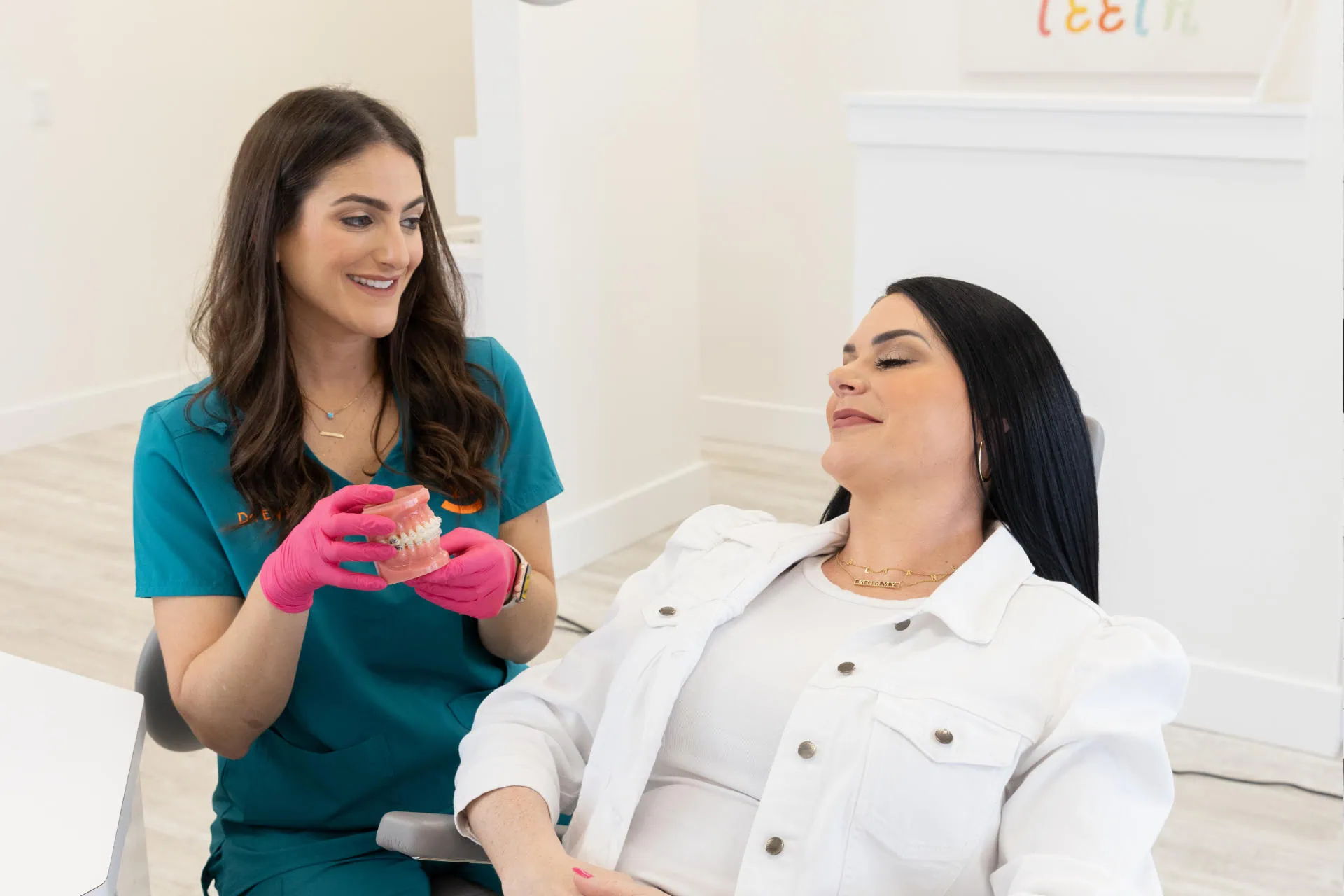
It is usually not too late to get braces as an adult; there is no fixed upper age limit for orthodontic treatment. Healthy gums, adequate bone support and the condition of your teeth matter more than your birthday. An orthodontic evaluation determines whether moving your teeth is appropriate and what care should come first.
You might be considering braces for the first time or noticing movement years after childhood treatment. Busciglio Smiles offers braces for adults in Tampa, with treatment decisions based on your bite and goals rather than the idea that straightening teeth belongs only to teenagers.
What Determines Whether an Adult Can Have Braces?
Gum Health & Bone Support Come First
Teeth move through the tissues that support them. Active gum disease or untreated decay can make starting orthodontics inappropriate until those problems are addressed. Tell the orthodontist about bleeding gums, loose teeth or previous periodontal treatment. A history of gum treatment does not automatically rule out braces, but it changes the questions that need answering.
A dental examination and any necessary records help clarify the health of the supporting structures. Your orthodontist may recommend coordination with your dentist or another dental professional before treatment begins. The goal is a plan that respects your current oral health, not a promise that every adult is ready for braces immediately.
Share your current medications, medical conditions and tobacco use during the health review. Do not stop a medicine to qualify for treatment. The orthodontist can explain whether any aspect of your history needs discussion with your dentist or physician. Bring the details even if they seem unrelated to the appearance of your teeth.
Previous Dental Work Changes the Plan
Bring information about crowns, bridges, implants, missing teeth and past root canal treatment. Existing restorations can affect where attachments go and how spaces are managed. An implant does not move like a natural tooth, for example. These details call for individualized planning rather than an automatic yes or no based on age.
How Is Adult Orthodontic Treatment Different?
Adults Are No Longer Growing
An adult's jaw growth is largely complete, so treatment cannot depend on the same growth changes available in a child. Braces can still move teeth, but a significant jaw mismatch may need a different approach. Your orthodontist will distinguish tooth alignment from the underlying jaw relationship and explain which goals are realistic without additional treatment.
Not every bite concern requires surgery. We offer orthodontic treatment for different alignment needs. If a severe skeletal concern is present, ask what braces alone can accomplish and whether other professional input is needed. A careful discussion should make the limits as clear as the possible improvements.
Separate your priorities before the visit. If chewing is uncomfortable, explain where food feels difficult to bite. If the concern is crowded teeth, describe the areas you cannot clean easily. Specific examples give the orthodontist more useful information than a general request for a perfect smile and help focus the conversation on achievable changes.
Daily Habits Matter More Than an Age Label
A full calendar does not prevent treatment, but it does require planning. Think about dental visits, cleaning after lunch, travel and foods you routinely eat. Tell the orthodontist what would be difficult to maintain. Choosing an appliance that fits your responsibilities is more useful than selecting one solely because it is less visible.
Which Appliance Fits a Working Adult's Routine?
We offer metal and ceramic braces as well as clear aligners. The clinical suitability of an appliance comes first. Appearance, meals and daily responsibilities can then help you compare appropriate choices without assuming the most discreet option is always the right treatment.
| Consideration | Metal braces | Ceramic braces | Clear aligners |
|---|---|---|---|
| Appearance | Visible metal brackets | Tooth-colored brackets | Clear removable trays |
| Meals | Fixed appliance needs food precautions | Similar food precautions to metal | Removed for eating as directed |
| Cleaning | Work around brackets and wires | Work around brackets and wires | Clean teeth and trays separately |
| Daily responsibility | Protect hardware and attend adjustments | Protect hardware and maintain hygiene | Follow the prescribed wear schedule |
| Decision point | Suitability for the planned movements | Suitability plus appearance preference | Suitability plus reliable wear |
For a closer look at tray-based treatment, explore the clear aligner process for adults with us. The initial questions are your candidacy for orthodontics and which responsibilities you can maintain over the course of care. For example, a removable option requires remembering to wear it consistently, while fixed braces require cleaning around hardware. Consider an ordinary busy weekday, not only how you would manage the appliance on a quiet weekend.
Can You Get Braces Again After Childhood Treatment?
Shifting Teeth Need a Fresh Evaluation
Teeth can change position after previous treatment, particularly when retention has been interrupted. A new gap or crowded lower teeth does not mean you must repeat the exact plan you had as a teenager. The orthodontist will evaluate your current bite, dental health and the extent of the change before recommending options.
Bring your old retainer and any available orthodontic records. Do not force a retainer that no longer fits, bend it yourself or use an online product to push a single tooth back. A tight appliance can signal movement, but it does not tell you which treatment is safe or how much correction is needed.
Retention Belongs in the Initial Conversation
Ask about the commitment after active treatment, not only the day braces come off. We offer fixed and removable retainer options to help hold tooth positions. The prescribed type and wear instructions depend on your needs. Retention is particularly relevant if stopping retainer wear contributed to your current concerns.
What Should You Ask Before Committing to Braces?
Clarify Goals & the Estimated Timeline
Explain what bothers you and ask what changes are feasible. A straighter front tooth, better cleaning access and improved bite contact are different goals. Treatment length depends on the movements required, tissue health and how care progresses. Being an adult alone does not produce a reliable estimate or establish that treatment must be slower.
Ask how the plan would change if a tooth does not move as expected or another dental issue develops. You should understand what needs monitoring during care. Continue routine dental visits because an orthodontic appointment does not replace cavity checks, gum care or professional cleaning.
Discuss Costs Alongside the Treatment Plan
We offer flexible payment plans and an insurance review during the initial examination. Ask for an individualized breakdown rather than using another person's fee as your estimate. Confirm what is included and what your coverage may contribute. An adult orthodontic benefit can differ from coverage for children on the same plan.
Does Being Nervous Mean You Should Wait?
Feeling self-conscious about visible braces or uncertain about discomfort is a reason to ask questions, not proof that treatment is wrong for you. Ask how you can manage meals at work and what to expect around adjustments. A practical discussion helps separate a temporary inconvenience from a responsibility that may not fit your circumstances.
If you are near our Brandon office, bring a written list of concerns to your evaluation. You do not have to decide on an appliance before anyone has examined your teeth. Understanding candidacy, limitations and the sequence of care comes before choosing the appearance of your brackets.
Frequently Asked Questions
Can braces straighten teeth if I am missing a tooth?
Possibly. The missing space, neighboring teeth and any planned replacement all affect the orthodontic plan. An evaluation can determine whether a space should be maintained, adjusted or closed in coordination with restorative dental care.
Will straight teeth prevent all future dental problems?
No. Better alignment may make some areas easier to clean, but brushing, interdental care and dental visits remain necessary. Orthodontics does not guarantee freedom from decay, gum disease or tooth wear.
Can I start with just the teeth that show when I smile?
Ask whether a limited approach would leave an unstable or uncomfortable bite. Front teeth do not function independently from the rest of the mouth. The orthodontist should assess how the proposed changes affect the overall bite before recommending limited treatment.
Explore Adult Braces With a Free Ortho Consult
Get a recommendation based on your mouth today. Request your free ortho consult at Busciglio Smiles to discuss adult candidacy, appropriate appliance choices and what needs attention before tooth movement begins. Bring your dental history and your questions about making treatment work alongside your daily responsibilities.