
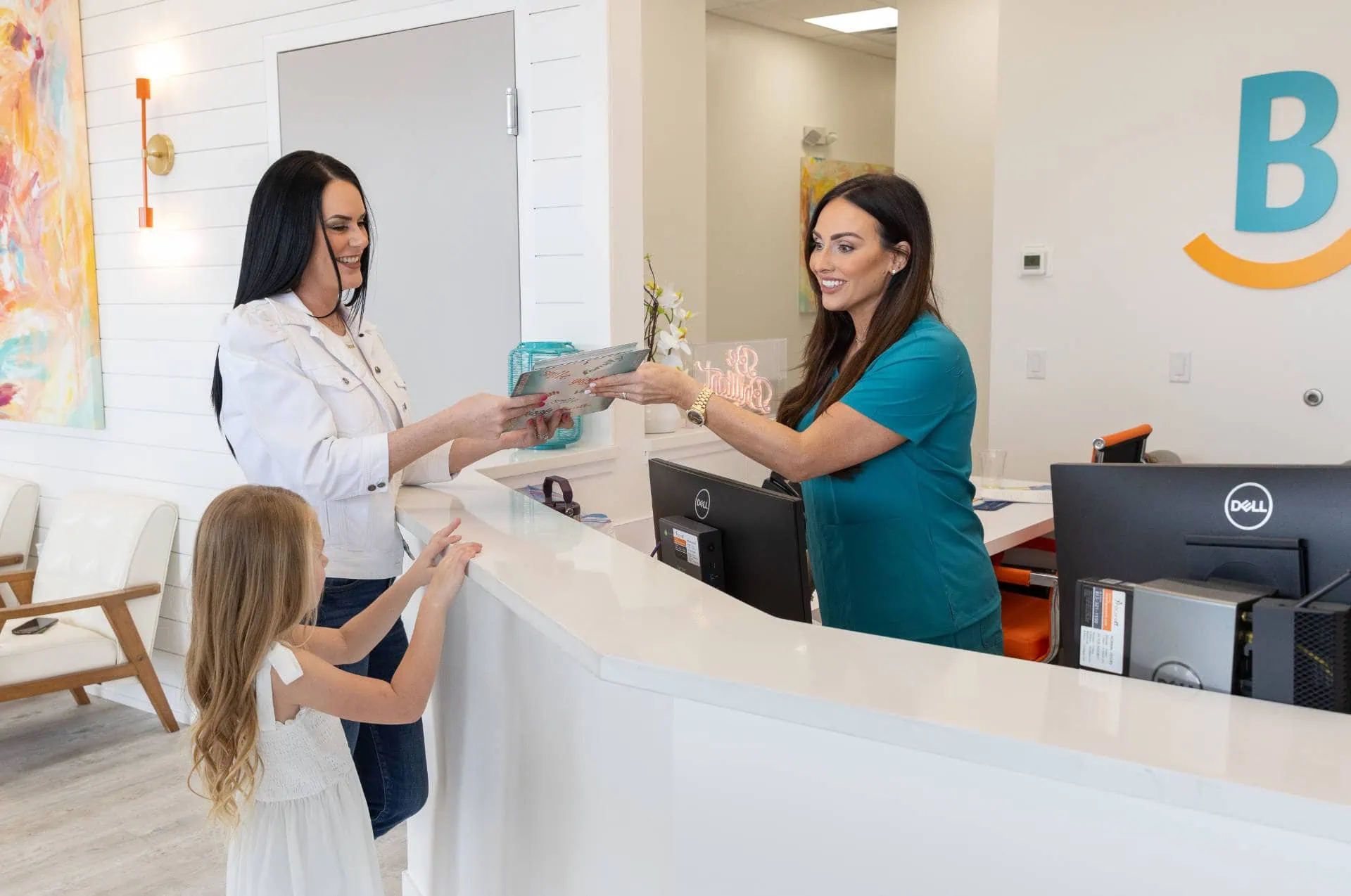
A free orthodontic consultation helps you understand whether treatment could improve your teeth or bite and what your options might involve. At Busciglio Smiles, the initial visit includes a complimentary panoramic X-ray and photos used to assess your needs and discuss treatment options.
You do not need to arrive knowing which appliance you want. Bring the concerns that matter to you, whether that is a crowded smile, teeth that do not meet comfortably, or uncertainty about a child's development. The consultation starts the planning conversation; it is not a promise of a particular treatment or result.
What Should You Bring to an Orthodontic Consultation?
Medical, Dental & Insurance Information
We ask you to bring your dentist's name, any X-rays provided to you, a current medication list, and dental insurance information. These details give the orthodontist context and help the team discuss practical next steps. Mention allergies, previous orthodontic care, dental injuries, and any current dental treatment too.
The new-patient resources and forms include orthodontic paperwork for children and adults. Completing the appropriate information ahead of time may help you focus on the conversation once you arrive. If you are unsure which forms apply, ask before the appointment rather than guessing.
Your Priorities & Questions
Write down what you would most like to change and what concerns you about treatment. A parent might ask about timing around a child's growth; an adult might need to understand workday appointments or cleaning around existing dental work. Those are useful clinical planning details, not distractions from the examination.
If you have worn a retainer or another appliance, explain how it fit and why you stopped using it. Share any jaw discomfort or difficulty chewing without trying to diagnose the cause. An orthodontist needs the history as well as the current appearance of your smile.
How Do the Examination & Records Help Plan Treatment?
Initial Photos & Panoramic Imaging
We use an initial panoramic X-ray and photographs to assess orthodontic needs and discuss options. Photographs show the teeth and smile, while imaging can reveal information about teeth and supporting structures that is not visible in a casual look at the mouth.
Your clinical assessment puts those records into context. The orthodontist considers how teeth meet and what needs further investigation. Ask what a finding means for you, not just what it is called. A recommendation is easier to understand when the team connects it to chewing, cleaning, development, or another concern you recognize. If your chief concern is not mentioned, raise it before moving to appliance choices. A small-looking issue may matter greatly to you, and your goals belong in the planning conversation.
Additional Records Are a Separate Planning Step
If you choose to pursue treatment, we take a complete set of diagnostic records. These typically include face and tooth photographs, panoramic and cephalometric X-rays, and digital scans. Do not assume every record is automatically part of every free consultation or that treatment always begins that day.
Our orthodontic technology includes iTero scanning. A digital scan records tooth surfaces; it does not replace the information an X-ray provides about structures beneath them. Ask whether a scan is needed for your case and when it fits into the recommended sequence.
Which Treatment Options & Timelines Will You Discuss?
Compare Options Against the Actual Bite
A consultation with an orthodontist serving Tampa-area patients can help distinguish an appearance concern from a bite problem. Those concerns can overlap, but they do not always require the same approach. The most discreet-looking appliance is not automatically appropriate for every tooth movement.
We offer braces treatment and clear aligners. Ask which approaches are suitable for your findings, what daily responsibilities they involve, and why another option might not be recommended. A useful comparison includes cleaning, appliance care, and consistency of wear, not just how treatment looks in photographs.
Ask What Could Change the Estimate
Treatment time is an estimate based on the movements needed and the way the bite fits together. Growth, oral health, appointment attendance, and following appliance instructions may affect progress. Ask what milestones the orthodontist expects and which findings might change the original plan.
Some children need monitoring rather than immediate treatment. Other patients may need dental care before orthodontics begins. Ask what has to happen first and who will explain the next step. Leaving with a monitoring recommendation can still make the consultation valuable because it replaces uncertainty with a plan.
How Can You Make Sense of Costs & Payment Choices?
Understand the Scope Before Comparing Fees
A free consultation is not the same as free orthodontic treatment. Our treatment fees depend on the individual patient, and we discuss fees and payment choices before treatment begins. A quote should make sense in relation to the treatment being recommended, not a general online price range.
Ask what the proposed fee includes and what might be separate. Clarify how records, appliance repairs, changes to the plan, and retention are handled for your case. These are questions to ask, not assumptions about an included package. Request an explanation you can review after the visit.
Review Benefits & the Payment Schedule
We accept most insurance plans and offer orthodontic payment plans, including interest-free and no-down-payment options. Availability and suitability still need individual confirmation. Bring your benefits information and ask how the office estimates coverage, what remains your responsibility, and when payments would be due.
Do not assume a dental policy includes orthodontic benefits or that a benefit estimate is a guarantee of payment. Ask about eligibility restrictions and the information needed to verify your situation. A financial conversation should leave you understanding the proposed commitment before you decide to proceed.
What Should You Know Before Leaving the Consultation?
Summarize the recommendation in your own words and ask the team to correct anything you have misunderstood. You should know what concern is being addressed, which options are reasonable, and what the next appointment would accomplish. There is no benefit to leaving with an appliance name but no understanding of its purpose.
| Discussion | Question worth asking |
|---|---|
| Clinical findings | Which teeth or bite relationships need attention, and why? |
| Treatment choices | What are the tradeoffs between the options suitable for me? |
| Timing | Should treatment start now, after dental care, or after observation? |
| Financial plan | What is included, what may be separate, and how do payments work? |
| Next appointment | Will it involve more records, monitoring, or starting an appliance? |
If you need time to review the recommendation, keep your notes together with any instructions. Tell the office if a new dental problem develops before the next visit. Planning is based on your current condition, so changes in health or recent dental work are worth sharing. If you have another treatment opinion, bring the recommendation and ask about differences in goals or sequencing. Different wording does not necessarily mean the plans conflict, and comparing the intended movements is more useful than comparing appliance names alone.
Frequently Asked Questions
Can adults request a free orthodontic consultation?
Yes. We offer orthodontic care for adults as well as younger patients. Your gum health, dental history, and goals help determine which choices may be appropriate.
Will a consultation replace my regular dental check-up?
No. Orthodontic assessment focuses on tooth alignment and bite relationships. Continue seeing your dentist for examinations, cleanings, and care of cavities or gum problems.
Should my child practice smiling for the photographs?
There is no need for a perfect rehearsal. Explain that the team will take pictures to help understand the teeth and bite, and mention any concerns about unfamiliar equipment in advance.
Arrange a Free Ortho Consult
Bring your questions to Busciglio Smiles and ask for a plan you can understand before making a treatment decision. You can request a free ortho consult and choose a convenient office, including the Brandon location. Call (813) 681-9473 if you need help preparing information for the appointment.