
When your child's teeth start coming in crooked or overlapped, it's natural to wonder what comes next. Orthodontic treatment options for crowded teeth in children range from early jaw guidance to braces and clear aligners, depending on age and severity. Dental crowding happens when there's not enough room in the jaw for permanent teeth to line up properly. The result? Teeth that twist, overlap, or push against each other as they try to find space.
What Is Dental Crowding in Children?
Dental crowding is a common alignment issue where permanent teeth don't have enough space in the jaw to come in straight. It typically appears between ages 7 and 14 as permanent teeth replace baby teeth, leading to overlapping, twisted, or rotated teeth. Causes include genetics, jaw size, early tooth loss, and certain oral habits. Early evaluation by our doctors at Busciglio Smiles helps determine the right time to act.
Several factors contribute to crowding. Genetics play a big role, so if you or your partner dealt with crowded teeth, your child might too. Early loss of baby teeth can cause neighboring teeth to shift into the gap. A smaller jaw paired with larger teeth creates a mismatch, and habits like prolonged thumb-sucking or pacifier use can also affect how the jaw develops.
That's why the American Association of Orthodontists recommends every child have their first orthodontic evaluation by age 7. At this stage, our doctors can spot developing issues and determine the best timing for treatment.
How Treatment for Crowded Teeth in Children Works
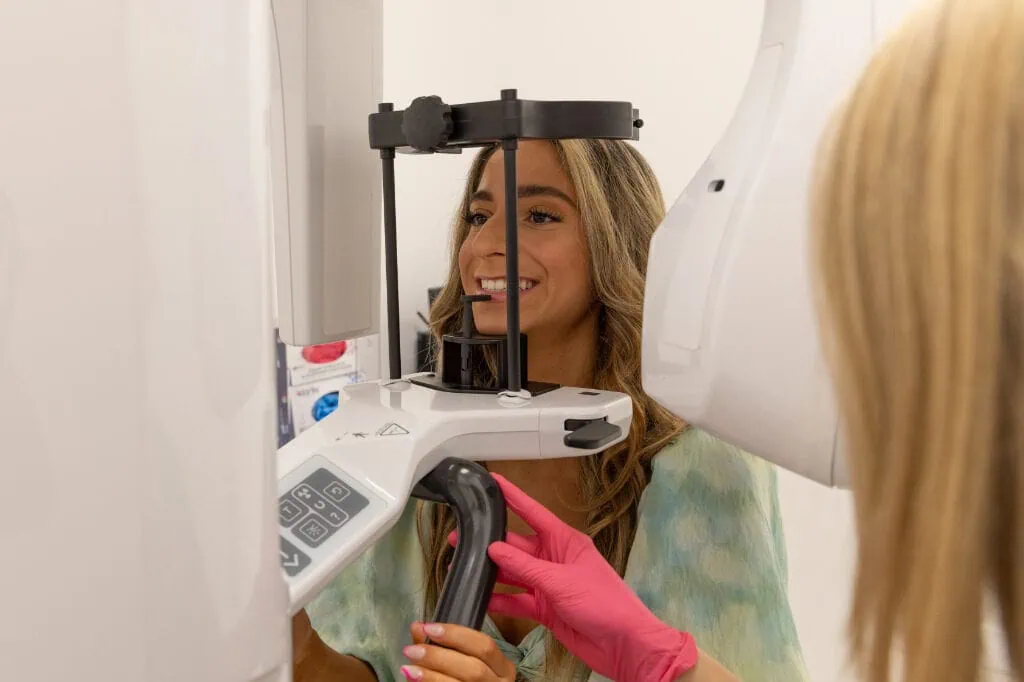
Treatment typically follows a clear path. It starts with a hands-on exam, diagnostic imaging with X-rays, and digital scans. From there, our doctors build a custom plan around your child's age and growth. That plan may include Phase 1 jaw guidance if needed, Phase 2 alignment with braces or clear aligners, and a retention stage to hold results. Our orthodontists tailor each step to your child.
Treatment for crowded teeth looks different for every child. It begins with a detailed exam that includes X-rays and digital scans. These images show us exactly what's happening beneath the surface: where permanent teeth are positioned, how the jaw is growing, and what kind of space we're working with.
From there, treatment planning gets personal. Your child's age, the severity of crowding, and their skeletal development all factor into the approach we recommend.
Phase 1 Treatment (Interceptive Orthodontics)
For younger children still in mixed dentition (meaning they have both baby teeth and permanent teeth), Phase 1 treatment can make a real difference. This early intervention focuses on guiding jaw growth while bones are still pliable. We might use a palatal expander to widen the upper jaw, creating room for teeth that haven't come in yet.
Phase 2 Treatment
Once most permanent teeth have come in, Phase 2 treatment shifts front teeth, canines, and molars into their proper positions and helps the upper and lower teeth meet correctly. This typically involves braces or clear aligners and addresses any remaining crowding, spacing, or bite issues.
Ongoing Care
During active treatment, your child will visit us every 4 to 8 weeks for adjustments. These appts let us track progress and make changes as needed. After treatment wraps up, the retention phase begins. Retainers keep teeth in their new positions while the bone and tissue stabilize around them.
At Busciglio Smiles, our board-certified orthodontists create custom treatment plans for each patient. Some children need both phases; others do well with Phase 2 alone. We'll walk you through exactly what your child needs based on their specific situation.
Benefits of Treating Crowded Teeth Early
Starting treatment at the right time can change the course of your child's oral health. Here's what early intervention can accomplish:
Early Treatment Often Reduces Tooth Removal
When we create space early, permanent teeth have room to come in naturally. This often eliminates the need to pull teeth later and keeps more of your child's natural smile intact. Our board-certified doctors focus on making room rather than taking teeth out whenever possible.
How Does Straightening Improve Oral Hygiene?
Crowded teeth are harder to brush and floss. Food and plaque get trapped in tight spaces, increasing cavity risk. Straighter teeth are simply easier to keep clean, which supports better long-term smile care.
Early Treatment Helps Guide Jaw Growth
Children's bones are still developing, which gives us an opportunity. We can influence how the jaw grows, potentially avoiding things like jaw expansion in adulthood or having to make room by taking teeth out later.
Does Early Care Prevent Impacted Teeth?
When there's no room for a tooth to come in, it can become impacted, stuck below the gum line. That can mean extra steps to help it erupt later. Early treatment helps prevent this entirely.
Treatment Boosts Confidence at a Key Age
Kids notice their smiles. A child who feels good about their teeth tends to smile more freely, which matters during those formative school years.
Will Phase 1 Shorten Later Treatment?
Phase 1 intervention often means Phase 2 treatment goes faster. The groundwork is already done, which can shave months off braces or aligners later.
What Are the Best Treatment Options for Crowded Teeth in Children?
Different situations call for different appliances. Here's how the main options stack up:
| Treatment Option | Best For | How It Works | Typical Age Range |
|---|---|---|---|
| Palatal Expanders | Creating upper jaw space | Gradually widens the palate over several months | 7-11 years |
| Space Maintainers | Preserving space after early tooth loss | Holds the gap open until permanent teeth come in | 5-10 years |
| Traditional Braces | Full correction of crowding | Brackets and wires move teeth into alignment | 10+ years |
| Clear Aligners | Discreet treatment for cooperative patients | Removable trays gradually shift teeth | 12+ years (varies) |
| Two-Phase Treatment | Complex cases needing early intervention | Combines Phase 1 jaw guidance with Phase 2 alignment | Starts at 7-9 years |
| Making Room by Removing a Tooth | Severe crowding when space can't be created otherwise | A tooth is taken out to open room for alignment | Varies by case |
Palatal Expanders
Palatal expanders work best between ages 7 and 11, when the midpalatal suture hasn't fully fused. A custom device fits against the roof of the mouth and gets adjusted gradually, widening the upper jaw to create space.
Space Maintainers
Space maintainers are simpler devices. When a baby tooth falls out too early, a space maintainer keeps neighboring teeth from drifting into the gap, preserving room for the permanent tooth.
Traditional Braces
Traditional braces remain a reliable option for full correction. Metal or ceramic brackets bonded to teeth work with archwires to move teeth precisely where they need to go.
Clear Aligners
Clear aligners offer a less visible option for older children and teens who can wear them responsibly. They work well for mild to moderate crowding but require compliance, with trays staying in for 20 to 22 hours daily.
Making Room
Making room by taking out a tooth is one option families and orthodontists may consider in severe cases where space can't reasonably be created through expansion or movement. Our doctors discuss the pros and cons with each family so you can make an informed choice.
Cost Factors for Treating Crowded Teeth
What affects orthodontic cost? Several factors shape the total investment, including the severity of crowding, the type of appliance chosen, whether one or two phases of treatment are needed, diagnostic imaging, and how often follow-up appts occur. Geographic area also plays a role. Each factor adds up differently for every child, which is why a personal estimate at our Plant City office is the most accurate way to plan.
| Factor | Impact on Cost |
|---|---|
| Severity of crowding | More complex cases require longer treatment |
| Type of appliance | Expanders, braces, and aligners each have different costs |
| Treatment phases | One-phase vs. two-phase affects total investment |
| Diagnostic imaging | X-rays, digital scans, and 3D models |
| Follow-up appts | Frequency and duration of visits |
| Geographic location | Costs vary by region |
Severity is usually the biggest driver. Mild crowding may only need a single phase of aligners or braces, while moderate-to-severe cases often involve expanders, longer treatment times, and more frequent appts. The appliance type matters too: clear aligners, ceramic braces, and metal braces all carry different price points. Phase 1 treatment generally represents a smaller investment than Phase 2, though many families choose to plan for both.
Insurance and Financing
Many dental insurance plans include orthodontic benefits for children, though coverage varies widely. Check your plan's lifetime orthodontic maximum and any age restrictions before treatment begins. Some plans cover a percentage of the total fee; others provide a flat-dollar benefit.
We offer 0% financing options to help families spread the investment across manageable monthly amounts. Our team works with you to find a payment structure that fits your family's monthly budget, including flexible terms and benefit verification before treatment begins.
Is Your Child a Candidate for Crowding Treatment?
A few signs suggest your child may need treatment. Look for these:
- Visible overlapping or twisted teeth. If teeth appear crooked or stacked on top of each other, crowding is likely present.
- Difficulty flossing. When floss shreds or won't fit between teeth, that's a sign they're too tight together.
- Early or late baby tooth loss. Teeth falling out much earlier or later than expected can disrupt spacing.
- Mouth breathing habits. Chronic mouth breathing can affect jaw development and contribute to crowding.
- History of thumb-sucking. Prolonged oral habits can push teeth out of alignment.
- Family history. If crowding runs in your family, your child has higher odds of experiencing it too.
The best way to know for sure? Schedule an evaluation. Per AAO guidelines, age 7 is ideal for a first orthodontic check-up. At this age, enough permanent teeth have come in to spot developing issues, yet there's still time to intervene effectively. Our board-certified orthodontists at Busciglio Smiles evaluate each child carefully at our Plant City location and recommend the right timing for families across the Plant City community.
Frequently Asked Questions
At what age should crowded teeth be treated?
The American Association of Orthodontists recommends an initial evaluation by age 7. Treatment timing depends on the specific situation. Some children benefit from early intervention between ages 7 and 10, while others do better waiting until most permanent teeth have come in, around age 11 to 13. Our board-certified doctors at Busciglio Smiles will recommend the right timing based on your child's development.
Can crowded teeth fix themselves as a child grows?
Crowding rarely resolves on its own. While jaws do grow during childhood, the teeth typically grow along with them. In some cases, crowding actually worsens as more permanent teeth come in and compete for limited space. Early evaluation at our Plant City office helps determine whether watchful waiting or intervention makes more sense.
Are tooth removals always needed for crowding?
No. An extraction-free approach works for many children. Many cases can be treated with expansion, braces, or aligners while keeping every permanent tooth in place. We focus on creating space whenever possible through jaw expansion or careful tooth movement. Taking a tooth out is considered only when other methods won't achieve the results your child needs.
How long does treatment for crowded teeth take?
Treatment duration varies based on severity and the approach used. Phase 1 treatment typically lasts 6 to 12 months, while Phase 2 with braces or aligners usually takes 12 to 24 months. Some children need both phases; others need only one. The team at Busciglio Smiles will give you a realistic timeline during your child's first visit.
Do palatal expanders hurt children?
Most children adjust to expanders within the first week. There's usually some pressure after each adjustment, a sensation of tightness across the palate, but actual discomfort is uncommon. Any soreness typically fades within an hour or two. We'll show you exactly how to adjust the device at home and what to expect.
Can clear aligners work for crowded teeth in kids?
Clear aligners can work well for older children and teens with mild to moderate crowding. The key factor is compliance. Aligners must be worn 20 to 22 hours per day to be effective. They come out for eating and brushing, which means your child needs to be responsible about putting them back in. For younger children or severe crowding, traditional braces often work better.
When should I bring my child in for a first orthodontic evaluation?
Age 7 is the sweet spot for a first orthodontic check, per AAO guidance. By this point, enough permanent teeth have come in for our doctors at Busciglio Smiles in Plant City to spot crowding patterns, bite issues, or jaw growth concerns early, while there's still flexibility to guide development naturally.