
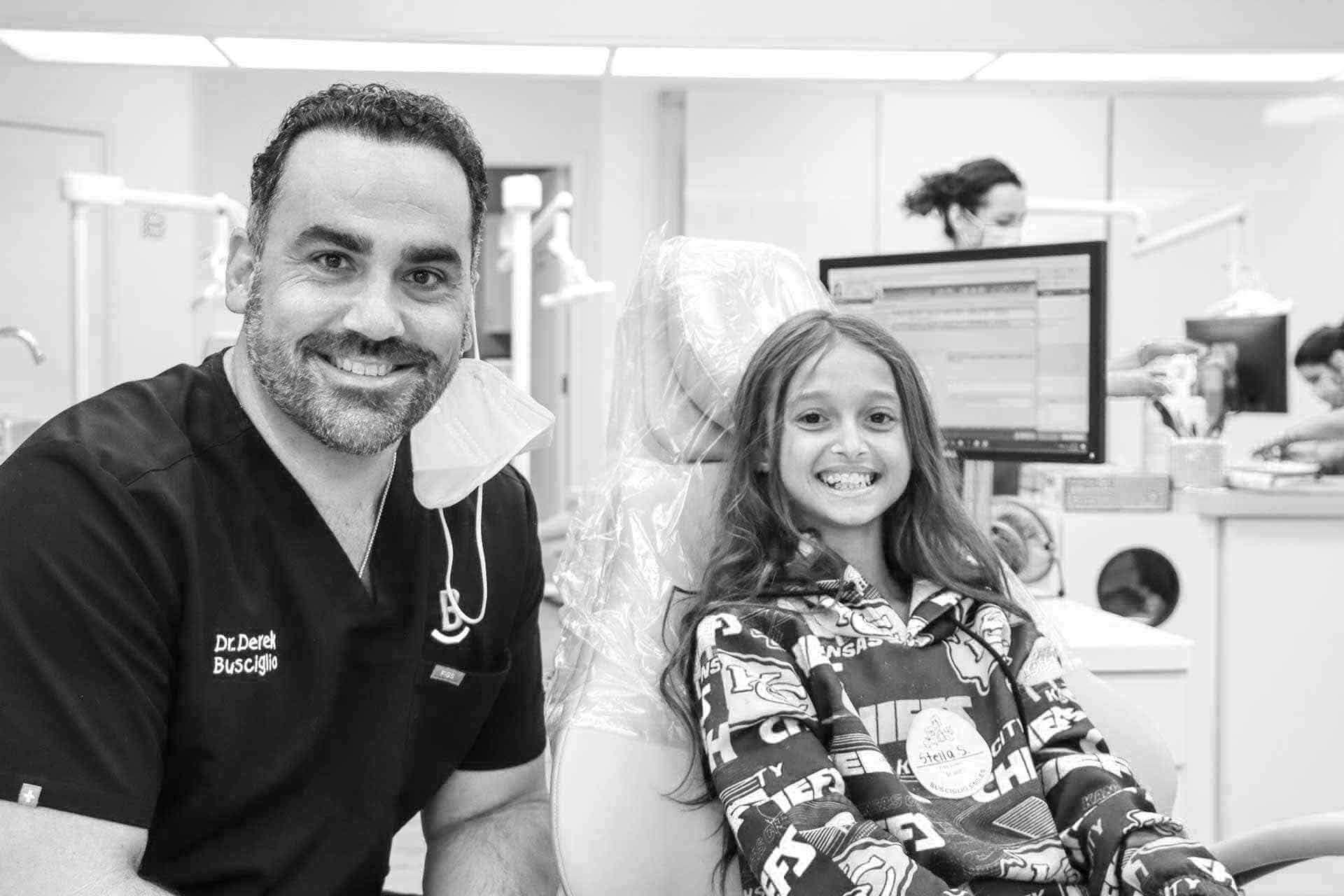
A child should first see an orthodontist by age 7, according to the American Association of Orthodontists. By this age, your child's permanent molars and front teeth have typically come in, giving our board-certified doctors at Busciglio Smiles a clear picture of how the bite is developing. An early check doesn't mean your child needs braces right away. Most kids we see at this age simply need monitoring until their mouth is ready for treatment. Think of it as a wellness check for your child's smile, catching potential concerns like crowding, crossbite, or jaw asymmetry before they become harder to correct.
What Happens at Your Child's First Orthodontic Visit
Your child's first orthodontic visit is relaxed and informative. Our team makes kids feel comfortable from the moment they walk in, and our board-certified orthodontists take time to explain everything in plain language.
During the appt, our doctors will:
- Examine teeth, jaw, and bite alignment - We look at how the upper and lower teeth fit together and check jaw positioning.
- Take digital X-rays or scans - These images reveal permanent teeth still developing beneath the gums, helping us predict future spacing needs.
- Discuss growth patterns and oral habits - Thumb-sucking, tongue thrusting, and mouth breathing can all affect how teeth come in. We'll talk through what we observe.
- Provide a recommendation built for your child - Based on what we find, we'll suggest one of three paths: start treatment now, wait and monitor, or simply check back in 6-12 months.
- Answer your questions - Bring your concerns about timeline, treatment types, and costs. We'll walk through everything so you leave feeling confident about next steps.
The whole visit typically takes about 30-45 minutes. Kids often tell us it was easier than they expected.
Benefits of Early Orthodontic Evaluation
Seeing an orthodontist by age 7 gives us options that aren't available later. The reason comes down to growth: while your child's jaw is still forming, we can shape outcomes that become locked in once development slows.
How Does Early Evaluation Guide Jaw Growth?
Young jaws are more responsive to treatment because the bones are still developing. We can shape growth in ways that become difficult once bones mature. This is the window where a palatal expander can widen a narrow upper jaw with gentle, steady pressure, work that's far harder to do once growth slows. Our doctors at Busciglio Smiles use this developmental window to set the stage for healthier bites down the road.
Why Does Creating Space for Permanent Teeth Matter?
If we spot crowding early, we can make room for teeth that haven't erupted yet, reducing the chance of impaction. Early intervention often means we can avoid pulling permanent teeth down the road, which keeps your child's natural smile intact.
A few more reasons families choose early evaluation:
- Corrects harmful habits - Persistent thumb-sucking or tongue thrusting can reshape the palate and push teeth forward. Addressing these habits early prevents lasting effects.
- Builds a balanced bite for everyday life - When upper and lower teeth meet correctly, kids chew more easily, speak more clearly, and put less strain on their jaw joints, which can prevent TMJ issues as they grow.
- Helps kids feel good about their smiles - Children notice when their front teeth stick out or look different from their friends'. Addressing visible concerns during these formative years often means more smiling in school photos and more confidence on the playground.
Early evaluation is about having options. Even if treatment isn't needed right away, knowing what's ahead helps families plan.
Phase 1 vs. Phase 2 Treatment: What's the Difference?
Phase 1 (interceptive) treatment happens between ages 7-10 and addresses skeletal issues and bite problems while a child is still growing. Phase 2 (full) treatment happens between ages 11-14 and aligns all permanent teeth once they've come in. Most children only need Phase 2, while a smaller group benefits from both phases when early skeletal concerns are present.
| Aspect | Phase 1 (Interceptive) | Phase 2 (Full) |
|---|---|---|
| Typical Age | 7-10 years old | 11-14 years old |
| Primary Goal | Address skeletal issues, create space, correct bite problems | Align all permanent teeth, refine bite |
| Common Appliances | Palatal expanders, partial braces, space maintainers | Full braces or clear aligners |
| Duration | 6-18 months | 12-24 months |
| Who Needs It | Children with crossbites, severe crowding, or jaw discrepancies | Most teens ready for full treatment |
Phase 1 treatment tackles problems that are easier to fix while your child is still growing. It might involve widening a narrow palate or guiding jaw growth. After Phase 1, there's usually a resting period where we monitor as remaining permanent teeth come in.
Phase 2 happens once all or most permanent teeth have erupted. This is the smile transformation most people picture when they think of children's braces, and it's where many families at Busciglio Smiles see the biggest visible change.
Our doctors will recommend what's right for your child's specific situation, whether that means early intervention now, full treatment later, or a combination of both.
What Affects the Cost of Children's Orthodontic Care?
Understanding what goes into orthodontic costs helps families plan ahead. The main factors are the initial consult, the complexity of the case, the type of appliance used, and your insurance or financing options.
Initial consults are often complimentary at Busciglio Smiles, so you can get answers without financial pressure. From there, a few things shape the final number.
- Phase 1 treatment typically costs less than full braces. Because it's shorter and uses fewer appliances, interceptive treatment is usually a smaller investment than full treatment later.
- Complexity matters. A simple spacing issue costs less to address than a significant bite problem requiring multiple appliances over time.
Appliance type also affects price. Palatal expanders, partial braces, and clear aligners each come with different costs, and we'll explain options that fit your child's needs and your budget.
Many dental insurance plans cover a portion of orthodontic treatment for children. We also offer 0% financing to make smile care accessible for more families.
Signs Your Child Should See an Orthodontist Sooner
While age 7 is the general guideline, some situations call for an earlier visit. Watch first for changes in how your child's teeth come in and how their bite functions:
- Early or late loss of baby teeth - Losing teeth much earlier or later than peers can signal spacing or development concerns.
- Difficulty chewing or biting - If your child avoids certain foods or complains about eating, their bite might be off.
- Mouth breathing - Chronic mouth breathing can affect facial development and tooth positioning.
- Thumb-sucking past age 5 - This habit can push front teeth forward and narrow the upper jaw.
Other concerns relate to the position of the teeth themselves and the way the jaws move:
- Crowded, blocked-out, or misplaced teeth - Teeth coming in crooked or in unexpected spots deserve evaluation.
- Jaws that shift, click, or seem uneven - Jaw asymmetry or sounds when opening and closing the mouth warrant attention.
- Teeth that don't meet properly - An open bite, crossbite, or deep overbite can all cause problems if left unaddressed.
Families in our community often tell us they wish they'd brought their child in sooner. If you notice any of these signs, don't wait until age 7. An earlier evaluation gives us more time and options.
Frequently Asked Questions
Is age 7 too young for braces?
Usually, yes. Full braces aren't typically what we recommend at this age, and that's not the goal of an age-7 visit. Most children who come in at 7 simply need monitoring. For the small percentage who do need early treatment, we use appliances like expanders or partial braces to address specific issues, not a full set of braces on every tooth.
Does my child need a referral from a dentist?
No referral is necessary. You can schedule directly with our team. That said, many pediatric dentists do refer patients our way when they spot potential orthodontic concerns during regular checkups.
How long does the first appointment take?
Plan for about 30-45 minutes. This gives us time for a thorough exam, any needed imaging, and a conversation about what we find. We never rush these visits because we want you leaving with clear answers.
What if my child doesn't need treatment yet?
That's actually the most common outcome for 7-year-olds. If your child's teeth and jaw are developing well, we'll simply ask you to come back in 6-12 months so we can keep an eye on things. There's no charge for these monitoring visits.
Will Phase 1 treatment prevent the need for braces later?
Not usually. Phase 1 treatment addresses specific problems but doesn't replace full treatment for most kids. It often makes Phase 2 shorter, simpler, or more effective, though. Some children who have Phase 1 treatment end up needing less extensive work as teens.
How often should we follow up after the first visit?
Every 6-12 months works well during a monitoring phase. This lets us track growth and catch the right moment to begin treatment. Once a smile transformation begins, appts are usually every 4-8 weeks.
Curious about what your child's smile needs next? Our board-certified orthodontists at Busciglio Smiles are here to help you understand your options.