
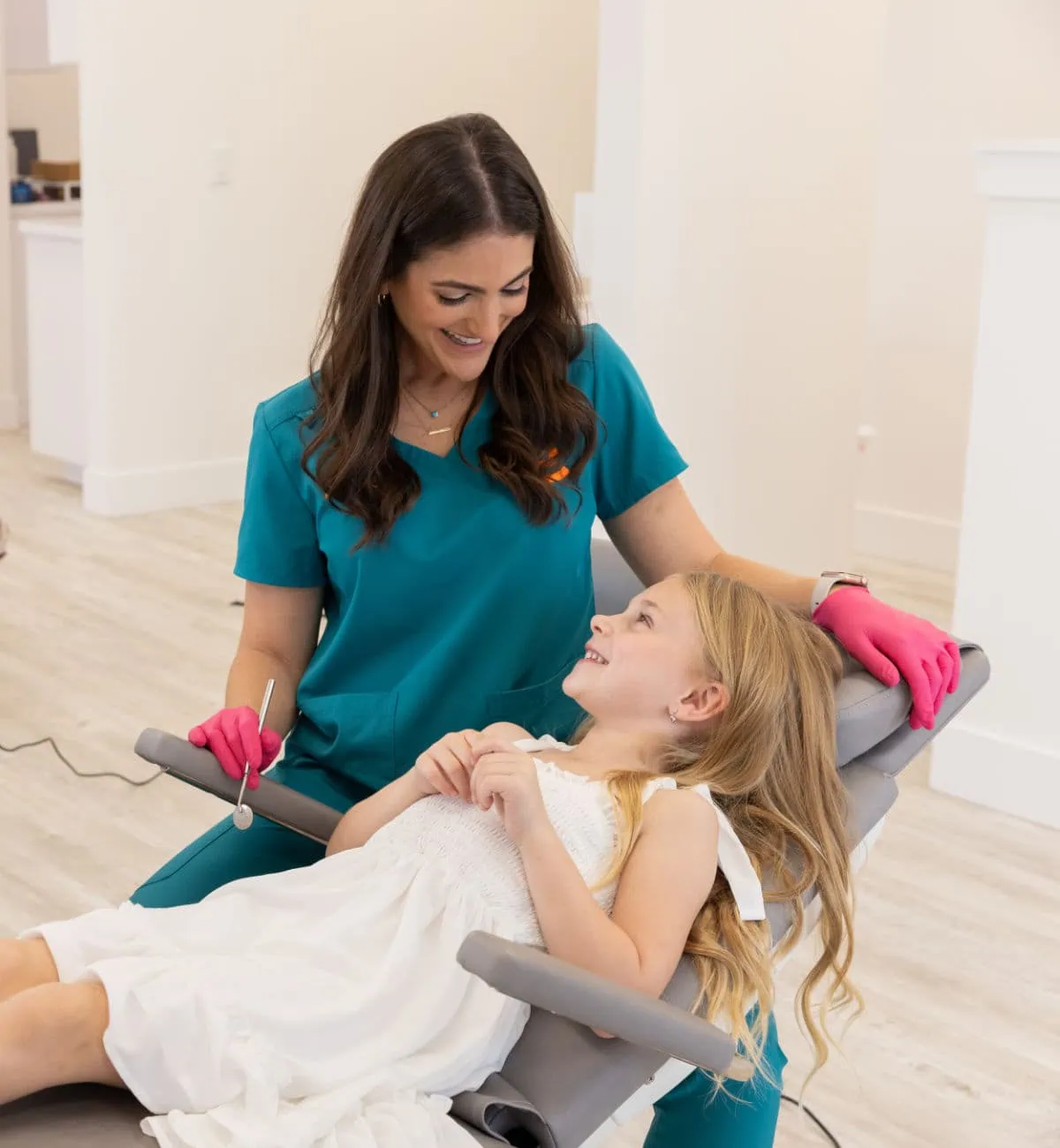
A practice that does both pediatric dentistry and orthodontics brings two distinct areas of smile care together under one roof. Instead of visiting separate offices for your child's cleanings and their braces consult, everything happens in one place with one team. The benefits of a dual-specialty practice show up in every visit, from infancy through the teen years, and Tampa families feel that difference from the very first appt.
What Is a Dual-Specialty Pediatric Dentistry and Orthodontics Practice?
A dual-specialty pediatric dentistry and orthodontics practice is a single office where pediatric dentists and orthodontists work side by side, sharing records, treatment plans, and decisions. Your child gets preventive smile care, developmental monitoring, and smile transformation services from one connected team, with no outside referrals required at any stage of growth.
Pediatric dentistry focuses on preventive care, cavity treatment, and monitoring how your child's teeth and jaws develop. Orthodontics addresses bite alignment, spacing issues, and tooth positioning. When these two areas work together, your child benefits from a unified treatment plan that considers the whole picture.
This model of care follows your child from their very first tooth through adolescence and beyond. The pediatric dentist tracks early development while the orthodontist watches for the right time to step in. Both teams share information, discuss your child's progress, and make decisions together. At Busciglio Smiles in Tampa, our doctors, including Dr. Derek Busciglio and Dr. Elyssa Barnett, lead this collaborative approach.
At Busciglio Smiles, we call this approach "two specialties under one roof." It's how we've helped Tampa Bay families for decades.
How a Combined Practice Works
A combined practice runs on shared records, in-house screenings, and one coordinated schedule. Both teams use the same charts, X-rays, and notes, so a pediatric checkup can also catch early orthodontic concerns. Our doctors compare cases together, and families book all of it at one front desk in our Tampa location.
The value of this model shows up in the details. Your child's records, X-rays, and treatment notes live in one system. Both the pediatric team and orthodontic team can access everything instantly. Our doctors review cases together, often within the same hallway.
Here's what this looks like in real life:
- During routine pediatric checkups, our doctors screen for early orthodontic concerns. The American Association of Orthodontists recommends children have their first orthodontic evaluation around age 7. In a combined practice, this happens naturally during a regular appt rather than requiring a separate referral.
- By the time your child is ready for braces care, the handoff is smooth. Your child already knows the office, the team, and the environment. There's no starting over at a new location with unfamiliar faces.
- Got multiple kids at different stages? Scheduling becomes much simpler. One child might need a cleaning while another gets their braces adjusted. We can often coordinate these appts on the same day. One parking spot. One waiting room. Easy.
- Two-phase orthodontic care works especially well in this model. Phase one (early intervention) begins during pediatric care years. Phase two (full treatment) continues through adolescence. The same team guides your child through both phases with a consistent approach.
Top Benefits of Choosing a Practice That Does Both
Families who choose a dual-specialty practice often tell us the benefits go well beyond convenience. Here's a quick look at what makes this model of care different:
- One trusted team from infancy through the teen years
- Earlier detection of bite, spacing, and airway concerns
- Less paperwork and zero outside referrals
- Lower dental anxiety in a familiar setting
- Unified treatment philosophy across both specialties
- Real time and cost savings through coordinated visits
How does continuity help my child's smile care?
Continuity builds trust. Your child gets to know one team over many years, and that familiarity makes smile care appts feel routine rather than stressful. From the first tooth all the way through final care for life, it's the same trusted team.
Why is earlier detection of issues a big deal?
Early detection often means simpler, shorter treatment. When pediatric and orthodontic doctors collaborate daily, they catch bite issues, spacing concerns, and airway issues sooner.
What about paperwork and referrals?
Paperwork stays light. Parents don't need to track down records, fill out new forms at multiple offices, or coordinate between providers. Everything stays in one place.
Can a combined practice reduce dental anxiety?
Yes. Kids who already feel comfortable in the pediatric setting don't have to adjust to a new environment when braces care begins. Same building, same friendly faces.
Do the doctors share one treatment philosophy?
Yes, our doctors discuss cases together. They agree on timing, approach, and goals. Your child's care isn't split between providers with different perspectives.
How does this save time and money?
Consolidated appts mean fewer trips. Shared diagnostic records mean fewer duplicate X-rays. One billing team handles everything.
Dual-Specialty Practice vs. Separate Providers
Knowing the differences helps you make the right choice for your family.
| Factor | Dual-Specialty Practice | Separate Providers |
|---|---|---|
| Communication | In-house, same-day collaboration | Referral letters, phone calls between offices |
| Records | One unified chart | Multiple offices to coordinate |
| Scheduling | Combined or back-to-back appts | Separate trips to different locations |
| Treatment Timing | Planned ahead, catch issues early | Often reactive once issues develop |
| Patient Experience | One trusted team throughout | Starting over with new providers |
| Insurance Coordination | Single billing department | Multiple billing contacts |
Because our doctors work in the same building, they can literally walk down the hall to chat about a case. That kind of real-time teamwork simply isn't possible when providers are in separate offices across town.
Parents juggling work, school pickups, and activities will appreciate having one location across the Tampa area. One check-in. One friendly front desk. One team that knows your kids by name. It really does change the rhythm of your week.
Cost and Value Considerations
A practice that does both pediatric dentistry and orthodontics often costs less, not more. Bundled exams, shared diagnostic records, and one coordinated billing team all trim the total. Early intervention can also prevent more involved care later.
Many families assume a dual-specialty practice costs more. The reality is often the opposite.
Bundled exams and consults can reduce overall fees compared to paying separately at two offices. When your child's orthodontic screening happens during a routine pediatric appt, you're not paying for an extra visit.
Shared diagnostic records cut down on duplicate X-rays. If the pediatric team already has recent imaging, the orthodontist can use those same records. That's money saved and less radiation exposure for your child.
Insurance coordination becomes much simpler with one billing team. They know how to maximize your pediatric dental benefits alongside orthodontic coverage. At Busciglio Smiles, we offer financing options to make smile care simple and affordable for every family in Tampa.
Early intervention often reduces long-term costs of braces care. Catching a developing bite issue at age 7 may prevent the need for more extensive treatment at age 13. Prevention is almost always less involved than correction.
Who Benefits Most From a Combined Practice?
While any family can appreciate the convenience of dual-specialty care at Busciglio Smiles, certain situations make this model especially valuable:
- Infants and toddlers due for their first dental appt (recommended by age 1)
- Children around age 7 who need their first orthodontic evaluation
- Kids who may need two-phase treatment starting with early intervention
- Families with multiple children at different developmental stages, juggling siblings is so much easier here
- Teens transitioning from pediatric care to active braces care
- Children with complex needs involving jaw development, airway concerns, or potential surgical orthodontics
Have a 3-year-old and an 8-year-old? A combined practice means both kids can be seen on the same day in our Tampa office. The younger child gets their checkup while the older one has their braces adjusted. That's one trip instead of two.
Kids who experience dental anxiety often feel calmer in a familiar setting. They've been coming to this office since their first tooth appeared, so starting orthodontic care doesn't feel like a big scary change. It's just another visit with the same team they've always known.
Frequently Asked Questions
At what age should my child see an orthodontist?
The American Association of Orthodontists recommends an orthodontic evaluation by age 7. At this age, your child has a mix of baby teeth and permanent teeth, which lets the orthodontist spot developing issues early. In a combined practice, this evaluation often happens during a routine pediatric appt.
Can a pediatric dentist place braces or aligners?
No. Pediatric dentists specialize in children's smile care, including cleanings, fillings, and developmental monitoring. Orthodontists complete extra years of specialized training in tooth movement and bite correction. Having both our doctors in one practice gives your child access to the right expert for each part of their care.
Is a dual-specialty practice more expensive?
Not typically. Families often save money through consolidated appts, shared diagnostic records, and coordinated insurance billing. Early detection of issues can also prevent more involved treatment later.
Do my child's records transfer automatically between specialties?
Yes. In a true dual-specialty practice like Busciglio Smiles, records are shared in one system. Both the pediatric team and orthodontic team access the same X-rays, notes, and treatment history.
What is two-phase orthodontic treatment?
Two-phase treatment addresses orthodontic issues in stages. Phase one typically occurs around ages 7-10 and focuses on guiding jaw growth or creating space for permanent teeth. Phase two happens in the teen years with braces or clear aligners for final alignment.
How do I know if my child needs early intervention?
Signs that may point to early orthodontic intervention include difficulty chewing, mouth breathing, thumb sucking past age 5, crowded or misplaced teeth, and jaws that shift or make sounds. Your pediatric dentist watches for these concerns during regular appts and will recommend an orthodontic evaluation when appropriate. If you're curious about what care under "two specialties under one roof" looks like for your family, our Tampa team is happy to answer questions during your next appt.